

1,600 words
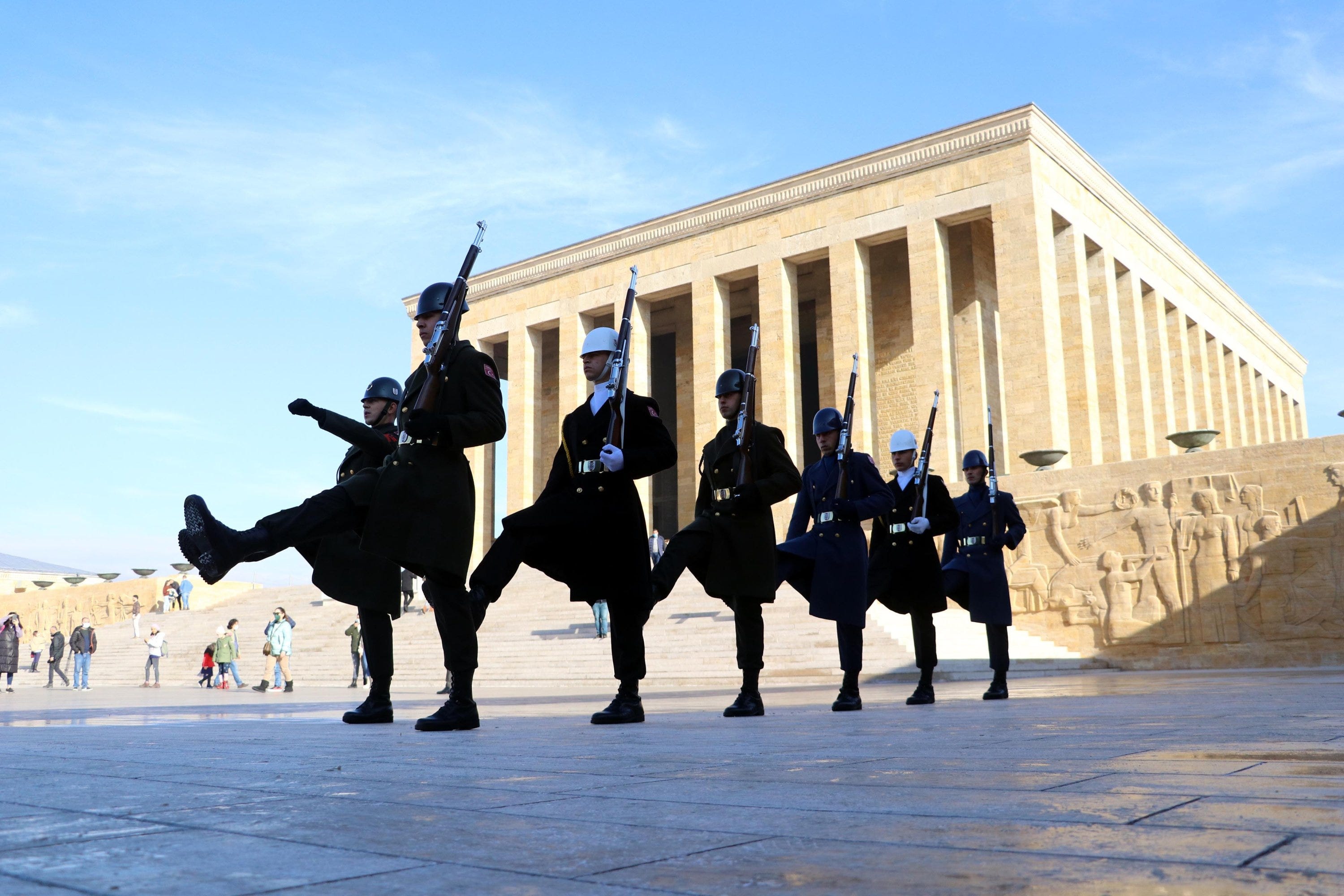
The “deep state” is a new term for an old idea. The term “deep state” dates to the 1990s and is a translation of a Turkish phrase, “derin devlet.” Turkish Islamists claim that the Turkish deep state is a network within their military, intelligence services, and judiciary—with connections to organized crime. The deep state operates behind the scenes to protect the secularist, nationalist Kemalist system from Islamists, Leftists, and Kurdish separatists. In extreme cases, the deep state has resorted to assassinations and military coups.
In America, I first noticed the term “deep state” during the Obama administration. The term is now common on the populist Right. As Americans use the term, the deep state is whatever thwarts Right-wing and populist policies. Thus the deep state includes the intelligence agencies, the bureaucracy, the military, and the judiciary—i.e., the unelected parts of the federal government. The deep state also includes elements of big business and academia. Beyond that, the deep state encompasses the leadership of both major parties. Basically, the deep state is America’s cultural and political elite, which uses its power and influence to thwart populist policies and defend entrenched elite interests.
Before the Obama years, the Right did not complain about a deep state but about the “eastern liberal establishment,” which means pretty much the same thing. The Left, of course, has similar concepts. Basically, they blame the oligarchy, the “military-industrial complex,” and the intelligence agencies for thwarting Left-wing energies.
By my reckoning there are three functions that a genuine deep state should perform.
First, a deep state should provide continuity of government, which is particularly necessary in liberal democracies, in which elected leaders are rotated out sometimes quite quickly. The flip side of ensuring continuity, however, is resisting change.
Second, a deep state should ensure that regime loyalists occupy all prominent positions in society, most especially in education and the creation of culture.
Third, a deep state should perform the function of the sovereign as defined by Carl Schmitt. For Schmitt, the sovereign is first and foremost a person. Schmitt has little to say about sovereign peoples and states. Instead, the sovereign is the person who deals with exceptions to the rules. Most of the time, we can be governed by general rules. But in human affairs, there are always exceptions to the rules. Given that they are exceptions, they cannot be foreseen by legislators and bureaucrats. Thus, when confronted with a fact that does not fall under the existing rules, a decision needs to be made. These exceptions crop up on all levels of society, thus bureaucrats, judges, and even cops on the beat are empowered to make decisions on the spot.
But at the highest level of government, particularly in crises in which an existing constitution—i.e., fundamental laws and institutions—are incapable of serving the common good, we need someone empowered to decide what to do. If such a figure needs to make decisions about the applicability of the fundamental law of the land, he is obviously in some sense “above” the existing constitution and law, since they can no longer guide him. Instead, he must be guided by the ultimate unwritten law, namely the common good of the people, which is the whole point of government in the first place. (For more on these topics, see my essays “Schmitt, Sovereignty, and the Deep State,” “Superheroes, Sovereignty, and the Deep State,” and “Yes to the Rule of Law.”)
In a crisis in which blood must be shed, soldiers and police need some assurance that they will not be tried as criminals for acting—outside the law, if need be—to preserve the nation. Thus their guilt must be heaped upon a scapegoat figure, namely the sovereign giving orders. Thus “I was just following orders” is a complete defense. But the sovereign who gives the orders cannot do his job—i.e., take both the credit and the blame for saving his nation—if he is not immunized from any form of prosecution for his extralegal acts.
Beyond that, he can’t really do his job if his position is at all contingent, i.e., subject to impeachment or requiring re-election. Thus the best sovereign would be not be an elected ruler but a hereditary monarch enjoying complete impunity for any act necessary to save the nation. The best hereditary monarch is a constitutional one, whose role is confined to dealing with emergencies, while the normal business of state is dealt with by elected representatives and bureaucrats.
This role was stated beautifully by the Austro-Hungarian Emperor Franz Joseph to former US President Theodore Roosevelt: “I am the last monarch of the old school. It is my duty to protect my peoples from their politicians.”
In my view, the single disadvantage of republics vs. monarchies is that elected heads of state cannot do what is necessary to quell a crisis, because they cannot act with impunity and their term of office is contingent on voters. A striking example of this is Donald Trump’s treatment of the BLM insurrection in 2020. If Trump thought only of the public good, the second night of riots would have been put down with violence, which would have prevented months of violence and bloodshed. But Trump allowed America to descend into the abyss because he feared that shooting down a few dozen rioters might . . . cost him the black vote or get him impeached by his political enemies. This is no small disadvantage.
But a true sovereign isn’t willing just to kill to maintain the social order. Killing is easy for governments, and the people who order it seldom face any personal risks. Beyond that, a leader might simply be killing to maintain his own personal status. His actions may be entirely selfish.
The true test of whether a leader fully identifies with the body politic is if he is willing to die to preserve his nation in an emergency. The Turkish generals who mounted coups were certainly willing to risk their lives to preserve a secular nationalist Turkey. But I am not so sure about the smug, lying bureaucrats who stymied Trump for social media clout.

In short, I wonder if America really has a deep state in the Turkish sense. Indeed, I wonder if America ever had one. The Founders simply took the metapolitical conditions of the Constitution for granted. Thus, for example, they saw no reason for the state to take a role in fostering public virtue. A nation with a deep state would not have descended into a Civil War which brought about an almost complete break with the old Constitution. Nor would a nation with a deep state have allowed its ruling elite to be ethnically replaced by Jews. Nor would a nation with a deep state be ruled by tribes that are out to loot it and utopians who regard it as a mere stepping-stone to global power and status.
The bedrock assumption in politics is that somebody is in charge, that the buck stops somewhere, that someone is ultimately responsible. Thus Americans are eager to imagine that ultimate power resides in the FBI or the CIA or various secret societies and fraternities. Because the military explicitly cultivates an ethos of self-sacrifice for the nation, some people hope that the military could act like a deep state. Such sentiments might exist among enlisted men, but they are carefully bred out of the officer class. America’s intelligence agencies are also candidates for a deep state. But these agencies have long lists of American legislators and bureaucrats who are agents of foreign powers. It is somebody’s job to track treason but nobody’s job to stop it.
The whole thrust of liberalism from the start has been to divide and distribute power, exalt private interests, and evade accountability. In America’s case, it may have worked all too well. Thus the nation continues to drift toward destruction, because no matter which party occupies the positions of power, it is beholden to looting tribes, but there is no faction anywhere near power that thinks about the common good.
Is the most powerful special interest group the American “deep state”? No, because the deep state identifies with the good of the whole political order. A special interest group, by its very nature, does not. Indeed, the stronger the special interest group, the more opposed it is to a deep state. An excellent example is Jewish control of the Trump regime’s foreign policy. The Iran War is being fought for the benefit of Israel, not the United States. If the United States had a deep state, Netanyahu would never have gotten in a room with Trump.
The sad truth is that America is a mess not because we have a deep state but because we lack one.
Every White Nationalist movement needs to aim not just at restoring or creating white homelands, but also at preserving them. That means that they must all build deep states. These deep states must perform three functions. First, they must secure the continuity of the regime through changes of government. Second, they must secure the continuity of the regime through crises. The best instrument for this is a constitutional monarch who controls the military. Third, they must place white racial idealists in all positions of power and influence. In such a society, we need not fear cultural and political pluralism, because as long as anti-whiteness is out of bounds, pretty much everything else can be in play.