

4,000 words
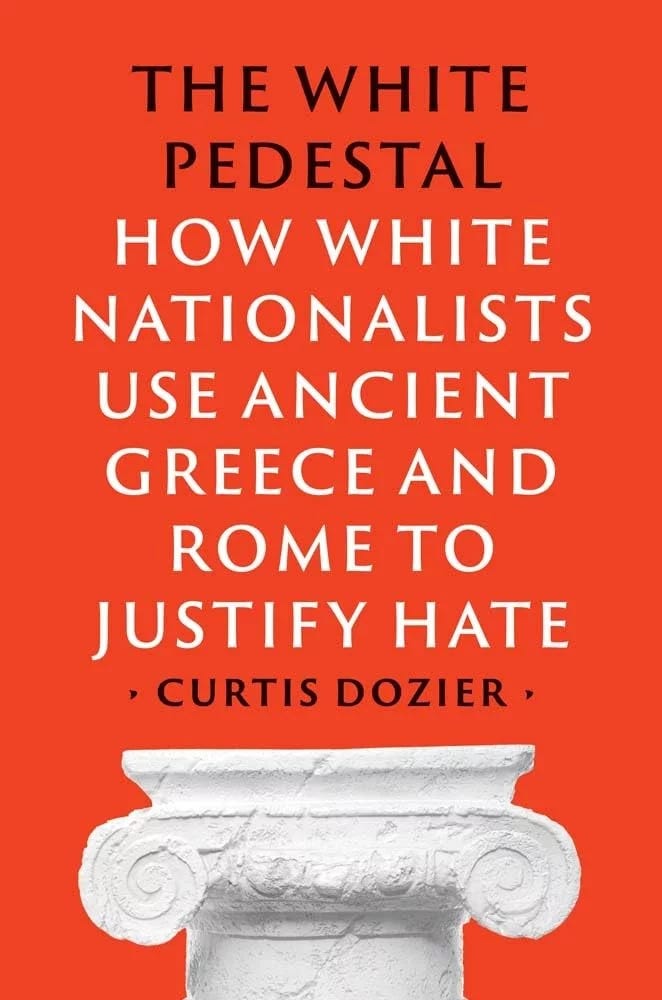
Curtis Dozier
The White Pedestal: How White Nationalists Use Ancient Greece and Rome to Justify Hate
New Haven: Yale University Press, 2026
Curtis Dozier is one of my long-time academic stalkers. An associate professor of Greek and Roman Studies at Vassar College in New York, he is the director of Pharos: Doing Justice to the Classics, a website on which Leftist classics scholars bemoan “appropriations” of classical antiquity by “hate groups.” Naturally, my writers and I are all over Pharos and Dozier’s new book.
Pharos started strong in late 2017, but by 2021, it was clearly running out of steam. With the publication of The White Pedestal, now we learn why.
At first, Dozier’s mission was to indignantly repel “haters” as if the classics were a citadel of his own degenerate, anti-white egalitarian ideas:
When I announced the project, I promised to “detail the inaccuracies, omissions, and distortions” I found. I believed then that my job as an expert was to show that the historical reality of antiquity had to be distorted in order to support racism. (p. 13)
But eventually, it dawned on Dozier that the racists are right:
This is a book about just how suitable models from Greco-Roman antiquity are, in fact, for those who wish to promote abhorrently racist ideas. Greco-Roman antiquity’s reputation as a high point in European history has eclipsed the fact that some of the most widely admired figures in ancient literature and philosophy endorsed ideas that modern white supremacists share, and that the social and political realities of the ancient world provide models for political systems that contemporary white supremacists would like to establish in our communities. (p. 3)
It turns out that we aren’t just right, for Dozier finds a “disturbing depth and sophistication” in “a certain kind of white nationalist interpretation of Greco-Roman history” (p. 176). This came as some surprise, because like most liberals, Dozier thinks that people on the Right are uneducated:
The assumption that racists must be uneducated may lead us to expect to find distortion, misuse, and abuse of history in their writings. But what we actually find is much more disturbing. We find that they know much more about history than we give them credit for. They know, for example, that they do not need to distort or misrepresent the writings of many ancient philosophers and historians in order to find ideas in them quite similar to those that inform white nationalist politics. In this respect, white nationalist intellectuals often see the ancient world with clearer eyes than those who assume such interpretations depend on distortions or lies. (p. 25)
I may have played a role in Dozier’s change of focus. Take a look at his essay “The Fourth Year of Pharos: What is the Emotional Toll?” from December 17, 2021:
Greg Johnson, the editor-in-chief of Counter Currents, likes to quote Aristotle. . . .
One of the essays in which Johnson invokes Aristotle is called Truth, Justice, and a Nice White Country, . . . I haven’t been able to shake Johnson’s discussion of what he meant by “A Nice White Country.”
This, Johnson says, is what white nationalists want: “nice white schools, nice white suburbs, nice white churches, nice white restaurants and parks and playgrounds.” . . . it is these “revealed preferences” of white people that give Johnson hope for his white nationalist cause: “When whites finally wake up,” he writes, “to the fact that the system will no longer let us have a separate peace—that we can no longer run away to find nice white schools and nice white communities—then White Nationalism will be a political possibility.”
. . . Johnson’s essay about white people rising up against a more equitable society looks pretty prophetic. That realization—that Johnson might be right, and that his movement, which so many people continue to describe as “far right” or “extremist,” might actually have widespread support—takes a toll. But even more, as I look back over that same period from 2014 until today, I know I lived my life and I made choices, some of which subverted white supremacist ideology, but others of which fit the pattern that white nationalists like Johnson are depending on “normal” people making to fuel their movement’s continuing rise. Where to live. Where to go to school. Which park to play at. Where to eat. Where to go to church. How different, really, is the life I’ve made than that which people like Johnson expect me to make?
. . . working on Pharos affects me because it is painful to see myself reflected in Greg Johnson’s confidence that most white people like me—especially white liberals like me—lack the courage and conviction to give up some of our comfort, our wealth, our access to power, our confidence that we deserve what we have, our isolation from people and experiences that are different from ours, in order to create a more just world.
(I have quoted Dozier at length, but I recommend reading the whole article.)
Indeed, Dozier has gone from attacking White Nationalists for allegedly misusing the classics to attacking the classics because they are actually White Nationalist:
It was the patent racism of white nationalist treatments of Greco-Roman antiquity, combined with the learning and sophistication evident within them, that forced me to recognize the extent to which I had absorbed and maintained racist understandings not just of the ancient world but of my own. (p. 15)
Thus, The White Pedestal is “a book about the presence of white nationalist ideas in the Greco-Roman world, and the influence of such ideas on the way that history has been preserved, remembered, and interpreted” (p. 27).
So it turns out that White Nationalists have not “appropriated” classical civilization after all. Instead, it belongs to us by right. White Nationalists are the legitimate heirs of classical civilization.
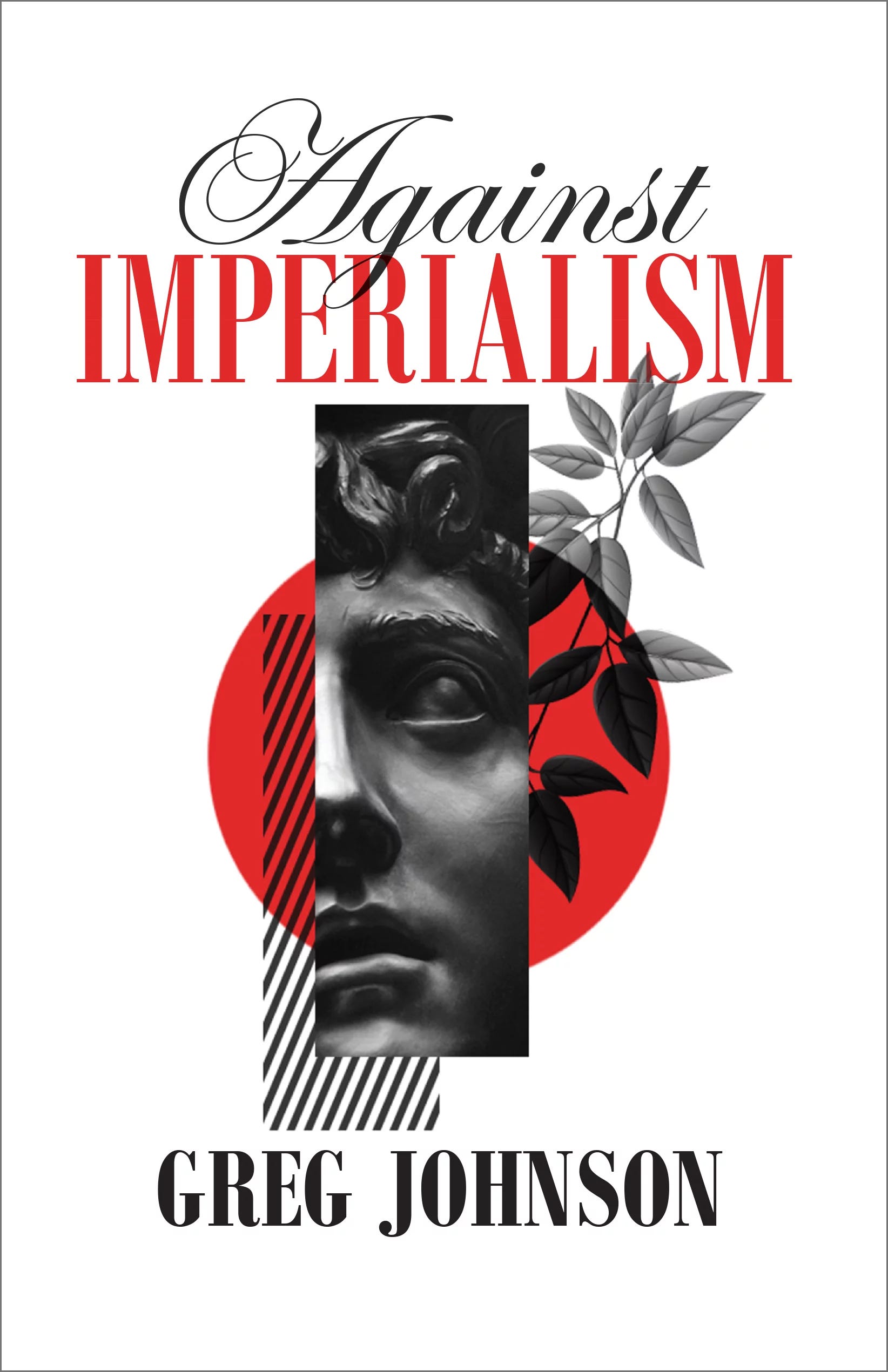
But even I wouldn’t say that the Ancient Greeks and Romans were actually “White Nationalists.” Imagine what most of the Ancients would have made of my book Against Imperialism. You can construct a case for universal ethnonationalism from Ancient Greek philosophical and historical premises. I have done so. But such views were very much a minority viewpoint.
Or, as I prefer to think, they were ahead of their time. We can be critical of the Ancients, because in some ways we have advanced beyond them. The Ancients provide us with truths—as well as falsehoods. They offer us models of what to do—and what not to do. The one area in which the Ancients were not a mixed bag is aesthetics. But even there, we have improved upon the Greeks, particularly in music.
Of course, we can say that China and India provide us with food for thought as well. But there’s a difference: whether we love them or hate them, the Ancient Greeks and Romans are recognizably us. That cannot be said about China and India.
Personally, I regard Rome as more of a cautionary tale than a model for emulation. But the vices and follies and failings of Rome remain very much ours, whereas the excesses of Oriental civilization—the weird impersonalism, the hieratic petrification, the inhuman cruelty and chaos—remain alien and repulsive, not perennial temptations.
A Failure of Scholarship & Civility
The White Pedestal gets off to a very bad start:
A Note on White Nationalist Sources
White Nationalist Intellectuals Seek academic legitimacy by imitating the conventions of scholarly discourse in their publications. To cite these publications in the same manner that I would cite other scholarship would confer such legitimacy, as well as visibility. Therefore I do not cite publications from white nationalist websites in my notes. Interested researchers will be able to locate them from my descriptions.
There are three problems with this.
First, this is simply unprofessional. Scholars should cite their sources, otherwise, what is stopping them from simply making up quotes and facts? Yale University Press is a scholarly publisher. Presumably, they have standards of scholarly integrity. Thus they never should have allowed this. Vassar College is an institution of higher education. Presumably, they have standards of scholarship as well. Would Vassar allow a white male student to get away with not citing a liberal? If not, then why allow one of their faculty? Did this book contribute in any way to Dozier’s promotion or tenure? Frankly, Yale should pulp this book, and Vassar should censure Dozier for violating basic standards of scholarship and professional ethics.
A case in point: all told, I am mentioned 34 times in The White Pedestal, and Counter-Currents is mentioned 37 times. The latter number would be much higher if Dozier had deigned to actually cite the White Nationalist publications he quotes.
There is, moreover, something odd about the works Dozier chooses to cite by me: all of them were published before 2019. But in 2019, I published From Plato to Postmodernism. In 2023, I published The Trial of Socrates. In 2025, I published Tyranny and Wisdom: Plato’s Greater Alcibiades and Gorgias. All of these are certainly relevant to Dozier’s project. So why didn’t he cite them?
My hypothesis is simple: this book started as the Pharos blog, which Dozier lost interest in by the end of 2021. My strong impression is that this book is simply cobbled together from his blog research. If Dozier did essentially no additional research after 2021, then it would make sense for him not to cite my books on ancient philosophy.
It might also make sense for him not to cite White Nationalist sources, lest it become clear to his publisher, colleagues, and employers that he had stopped doing research years before his book was written. I seriously doubt that Yale or Vassar or the scholars who contributed promotional quotes would have looked favorably upon a book dealing with a current intellectual trend that doesn’t deal with the last five years of that trend.
In short, maybe Dozier is not citing his sources to cover up his own shoddy research. Frankly, every researcher who refuses to cite sources should immediately be suspected of fraud.
Second, Dozier’s gesture simply assumes that academia has an endless capital of “legitimacy,” a commodity that White Nationalists seek and that he can dispense or withhold. This is a very primitive, Leftist attitude: legitimacy is somehow just there, to be looted or hoarded. The question of how legitimacy is produced does not seem to have entered Dozier’s mind.
Academia only has legitimacy because it pursues and passes on the truth. One of the assurances of truth, however, is that scholarly works can be confirmed by outside reviewers. But this is only possible if scholars cite their sources. If Dozier doesn’t cite his sources, then he has no academic legitimacy to confer, and neither do Yale University Press or Vassar College or the people who have praised this book.
Third, Dozier’s gesture is deeply uncivil. Civility is how we deal with differences of opinion in the same political system. Of course, civility only makes sense if you envision continuing to live with people. Dozier evidently envisions a world in which White Nationalists do not exist. (See my essay, “Civility and its Discontents.”)
A Puzzling Mishmash
Dozier’s first chapter, “The Who and the Why of White Nationalist History” begins with . . . Tucker Carlson, being fired from Fox after promoting a “conspiracy theory” (p. 16) called the Great Replacement created by French writer Renaud Camus. Moreover, as Dozier solemnly reports, the Great Replacement was referred to by Brenton Tarrant, who slaughtered a bunch of Muslims in New Zealand.
Why mention any of this in a book on White Nationalism and the classics? Camus does refer to Plato, but it has no real connection to the Great Replacement as an idea, much less Tucker Carlson, much less Tarrant and his killing spree. The lurid opening is simply dictated by the nature of the book, which is a smear job.
The rest of the chapter surveys a number of White Nationalist and broadly New Right thinkers who deal with the classics, some quite tangentially: Dominique Venner, who was a great admirer of Homer; Alain de Benoist, who worked with Venner; Revilo Oliver, who was an actual classics professor, although it had precious little to do with his political work; George Lincoln Rockwell, who has nothing to do with the classics but created the American Nazi Party, which sounds scary; William Pierce, who had a Ph.D. in physics and opinions on the ancient world (of course Dozier also mentions the Oklahoma City Bombing); Kevin MacDonald, Editor of The Occidental Quarterly, which has published on topics related to classical antiquity; and Jared Taylor of American Renaissance, which uses an Ionic column in its logo. (Perhaps VDare would have received more attention if they had bought a neoclassical mansion rather than a medieval castle.) I am also mentioned in this chapter, as is Counter-Currents. Enoch Powell, Ricardo Duchesne, Costin Alamariu, and F. Roger Devlin all have Ph.D.s and have written about the classical world, but they are not mentioned until later chapters.
Dozier devotes a section to classical discussions of the Jewish Question, remarking that “White nationalists are able to muster such an impressive range of sources because they know how to do their research” (p. 30). Then he mentions Robert Bowers, the gunman who attacked the Tree of Life Synagogue outside of Pittsburgh. This is Dozier engaging in what Orwell called “crimestop.” The Bowers attack is tossed in lest Dozier—or his readers—start thinking seriously about what the ancient Greeks and Romans said about Jews.
The whole chapter is a lurid, hare-brained mishmash which gives the impression that it wasn’t so much written as simply dragged and dropped.
Chapter 2, “The Last Stand Against Modernity,” deals with classical warrior virtues. Naturally, it begins with the “insurrection” of January 6, 2021. Dozier devotes a few pages to my discussion of thumos (pp. 45–47). Perhaps I flatter myself, but I detect an undertone of grudging respect.
Chapter 3, “Predicting the New Dark Ages,” deals with White Nationalist discussions of the decline of Rome, which we of course use as a heuristic for understanding our own decadence. Dozier grants that “white nationalist intellectuals may not be far off base in granting Gibbon pride of place in their list of historians who provide legitimacy for their positions” (p. 74).
Chapter 4, “The Descendants of Achilles,” deals with claims about the whiteness of the Greeks and Romans and the continuity of white civilization from antiquity to the present. Dozier, like most Leftist academics, repeats the imbecilic mantra that race is “pseudoscientific” (p. 5), which makes possible such pronouncements as, “White nationalists know that the reality of genetics obliterates their claim to share a racial identity with the ancient Greeks” (p. 91). In truth, racial differences are obvious to prescientific experience, which remains valid even though scientific explanations of these experiences might come and go with time. (See my essay “Why Race Is Not a Social Construct.”)
Chapter 5, “The Prometheans,” is another strange mishmash: less a composition than a car crash, a forty-car freeway pileup in prose. The chapter begins with some inchoate hand-wringing about classical architecture. Basically, Dozier is struggling with the question, “How can I like classical architecture, given that Donald Trump likes it?” Indeed, classical architecture is “the preferred style of dictators such as Adolf Hitler and Benito Mussolini” (p. 111). Sure, but classical architecture was also the preferred style of people like Stalin as well. So what does this have to do with the aesthetic value of classical architecture? Dozier seems haunted by non-white anti-colonial voices who are neurotically triggered by classical architecture. He needs to just ignore them.
The chapter then leaps to F. Roger Devlin’s review essay on The Landmark Herodotus, which I commissioned back when I edited The Occidental Quarterly. Dozier, however, refuses to cite the original article’s source. He even refuses to use Devlin’s name, which is an uncivil touch. He does, however, grant that his “understanding of Herodotus has been the dominant one” (p. 119). Namely, Devlin emphasizes Herodotus’ contrasts between Greek and Oriental civilization and politics.
After that, the chapter jumps to Richardo Duchesne’s articles on the foundational importance of the Greeks for Western civilization. Dozier grants that Duchesne is also in harmony with most classical scholars.
Then Dozier discusses ranking civilizations, hopping around from Charles Murray to the Council of Conservative Citizens to Andrew Anglin to Francis Galton and eugenics, finally lighting on . . . Graham Hancock, who peddles genuinely pseudoscientific speculations about ancient civilizations and myths like Atlantis. Dozier solemnly declares that the vast literature on Atlantis “may seem to be nothing more than harmless quackery” but he detects that “the assumption of white supremacy lurks at its core” (p. 132).
Chapter 6, “The (Un)Natural Order,” deals with the idea of natural hierarchy in Greco-Roman thought. Naturally, the chapter begins with the Unite the Right rally in Charlottesville, Virginia, in August of 2017. After all, Unite the Right was about saving a Confederate monument, and antebellum Southerners loved classical columns and literature. Also, some of the protesters emblazoned themselves with SPQR and the fasces.
One of these young men was James Fields, Jr., who will die in jail for killing a protester in a car accident in the chaos following the Unite the Right rally. Dozier, however, pointedly does not mention his name. Nor does he mention the name of Dylan Storm Roof, who killed nine blacks in Charleston, South Carolina, in 2015. Roof also liked the Confederacy and thus, presumably, Greek columns as well.
These deaths are mentioned because, “The presence of classical symbolism at the Charlottesville rally illustrates how the work of white nationalist intellectuals such as that published by Counter-Currents informs the actions of violent white nationalist activists in the real world” (p. 138).
This is disgusting dishonesty. What, exactly, is he insinuating here with the weasel word “informs”? Dozier gives absolutely no basis for believing that Fields or Roof ever read Counter-Currents. Nor does he offer evidence that they were influenced by Counter-Currents. Moreover, if they had read Counter-Currents, Fields would have stayed away from Unite the Right, and Roof would not have shot a bunch of people, because I explicitly warned people away from Unite the Right, and I explicitly condemn terrorism.
But apparently to Dozier’s mind, what I actually said pales in probative value compared to the fact that I write about Socrates, and James Fields carried a shield with a fasces, and Dylan Roof liked the Confederacy, and those are all somehow linked together by Greek columns. Frankly, this smacks of paranoid schizophrenia . . . or pandering to it.
There is a tone of paranoia and near hysteria throughout The White Pedestal. Imagine Dana Carvey reading this in his Church Lady voice:
. . . if the investigation this book offers seems grim, joyless, and exhausting, and if you find yourself yearning for one of the countless books about how exciting, impressive, or inspiring the ancient world is, bear in mind that that’s what the white nationalist movement expects you to do. In fact, it’s what they need you to do, because they need the Greco-Roman world to retain the prestige they seek to harness in support of their hateful politics. (p. 12)
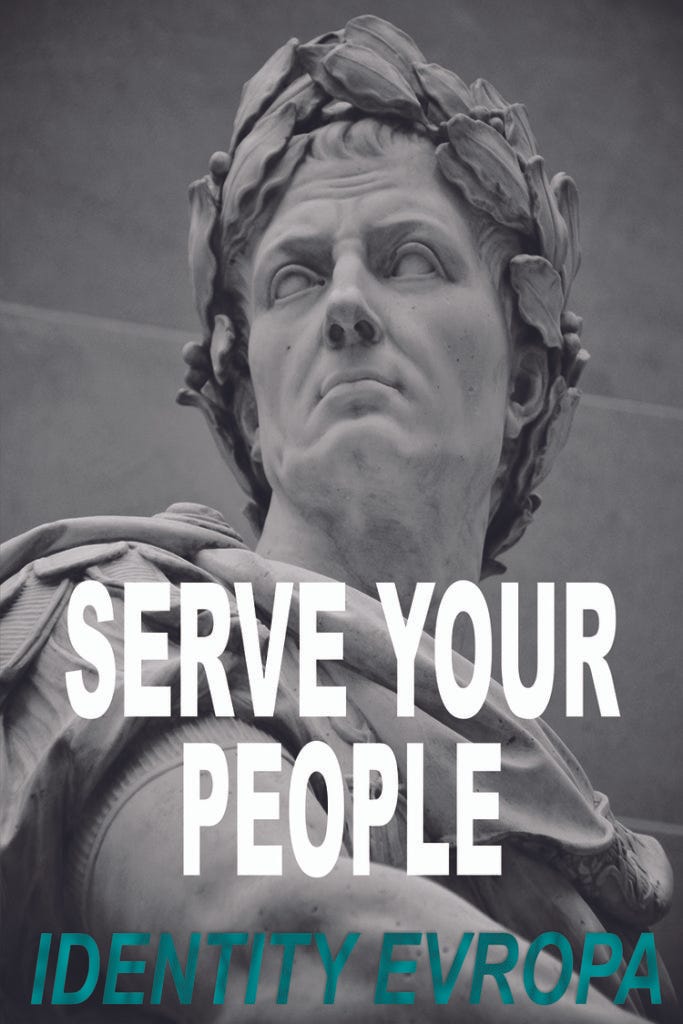
Dozier is unintentionally funny when he describes “Identity Evropa, the white nationalist organization that terrorized college campuses with posters featuring classical sculpture” (p. 139). Contrast this with Dozier’s reference to the “overwhelmingly peaceful Black Lives Matter movement” (p. 122).
Chapter 7, “The Dream of a White Homeland,” hovers vaguely and inconclusively around classical ideas connected to diversity and homogeneity.
Who Are the Guardians of Classical Civilization?
Dozier’s “Conclusion: Taking the Classics Forward” is a call to make academic classics programs even more politically correct, since the classical world and its legacy are so far out of step with the radical egalitarian ideology that grips today’s academy.
Dozier, of course, thinks that all people are basically equal. Thus all inequalities are merely socially contingent constructs that can be done away with by reeducation and social engineering. So nothing bad can really happen to classical studies by promoting more diversity: i.e., highlighting non-whites in classical history, trying to appeal to non-white readers and students, and promoting women and non-whites into the classics profession.
There are two problems with this.
First, all of these efforts at diversification are accompanied by lies. Leftists don’t just seek out “diversity” in our past. They simply fabricate it. Does Curtis Dozier have the guts to tell Afrocentrists that, no, Greek culture was not stolen from Egyptians and that, no, the Ancient Egyptians were not black? If so, then he is not a trustworthy guardian of our classical heritage.
Moreover, the promotion of women and non-whites in academia has thoroughly corrupted every discipline, for you can’t hire the best man for the job if you have a competing qualification, namely diversity. (See my essay “How Diversity Destroys.”)
Does Curtis Dozier have the guts to uphold professional standards when women and non-whites seek scholarships, jobs, and promotion? The answer is suggested simply by noting that he approvingly quotes the wisdom of Ibram X. Kendi (p. 15).
The second problem is much more fundamental. What if people really aren’t equal? What if different races and cultures really are different? What if we see ourselves in classical civilization because it really is ours? What if it fits us because we created it, and it created us? What if non-whites don’t see themselves in classical civilization because it isn’t the sort of civilization they would create for themselves?
What if “white privilege” just means that white people have created a civilization that we find comfortable for us, just as “Japanese privilege” means that Japanese society is an expression of the Japanese people? If so, that entails that other races inevitably find our civilization uncomfortable, just as non-Japanese will inevitably feel out of place in Japan. (See my essay “The Very Idea of White Privilege.”)
If races and civilizations really are different, then we cannot carry forward our classical heritage by trying to appeal to the sensibilities of non-white students. Nor are non-white faculty reliable guardians of our classical heritage, because on some deep level, it will inevitably feel alien to them, because it really isn’t theirs.
This is why I have long maintained that not only are White Nationalists the legitimate heirs of white civilization, but we are also the only people who can preserve it and carry it forward. Modern academia, by contrast, is anti-white and thus incompatible with the survival of our civilization. Many academics are actively anti-white, while others are merely too weak to oppose the destruction of our civilization. Thus for White Nationalists, true regime change requires more than just a new government. It requires a complete purge of anti-whites and their enablers from academia and all other institutions that shape the culture.
Along with its lapses of civility and taste, The White Pedestal contains a number of simple factual errors. For instance, F. Roger Devlin has a Ph.D. in philosophy, not political science (p. 117). William H. Regnery II is correctly referred to as the nephew of the founder of Regnery Publishing (p. 24) and incorrectly referred to as one of the heirs of the Regnery Publishing fortune on p. 87. The latter error is quite common in “anti-hate” literature, and the fact that it appears alongside the truth reinforces the idea that this book was hastily cobbled together from blog posts written at different times. Dozier also claims that Counter-Currents celebrates Enoch Powell’s birthday every year (p. 55). We don’t, but I will take it under advisement.
The White Pedestal is useful for White Nationalists simply for the grudging respect Dozier offers us. Dozier has weighed the evidence and declares, against his personal interest as an academic classics scholar, that Ancient Greece and Rome are more aligned with White Nationalism than the academic Left.
Of course, this only matters if we take Dozier, Yale University Press, Vassar College, and academia in general seriously as authorities. But Dozier himself makes that impossible by completely abandoning basic scholarly standards. Thus I cannot recommend The White Pedestal. It is a despicable intellectual performance and a miserable read.
Thanks for the excellent essay on an interesting topic. Interpreting ancient history is extremely complex, I don't think it's a simple matter of applying those classical thoughts to the current world, but it's important to know history in general in an case. Personally I think a lot of this so-called "White Nationalist" controversy comes down to the simple fact that due to reasons of communist politics, Whites have been specifically targeted for oppression, most likely because Whites as a group are dangerous to the Globalist-Communist project, despite the fact that modern Globalism and Communism were invented by the white ruling class, who know how to enslave people.
Since Dozier did not cite one of your works, you have no legitimacy now.