

1,550 words
Since 2011, Counter-Currents has organized private, invitation-only weekend retreats for our writers, donors, and friends. We have had many distinguished speakers and guests, including Jonathan Bowden, Kevin MacDonald, Mark Weber, Jared Taylor, Charles Krafft, Roger Devlin, and Edward Dutton.
One purpose of these retreats is to foster real-world fellowship and collaborations. We keep the size small (under 50) and the program loose to make it easier to socialize and network. We don’t have a lot of talks, but we do have panel discussions, debates, and Q&As to encourage audience participation, in fact to break down the distinction between the audience and the speakers.
In 2023, Counter-Currents held its first European retreat. It made sense, because we have many European writers, donors, and friends. In 2025 we held our second. This year, we held our third in the Eternal City herself.
Why Rome? Because, the meme says, we seldom go a day without thinking about Rome. Ancient Rome is one of the foundational cultures of our civilization, and Rome remains one of the world’s great cities. Thus if we held our retreat in Rome, a lot of people would say “yes” with no hesitation. I was right.
Rome is important to our movement not just for its rich past. Rome is also the headquarters of CasaPound, a very significant social movement of the Italian Right. CasaPound began in Rome 23 years ago when fans of the rock band ZetaZeroAlfa decided to squat in an abandoned 7-story building owned by the city of Rome on the via Napoleone III near the basilica of Santa Maria Maggiore. Since then, CasaPound has grown into a social movement encompassing all of Italy, with members and centers in all 20 Regions, all social classes, from rural areas and small towns to the largest cities.
Last year, I was in Rome and stumbled across the CasaPound headquarters. I’d been so caught up in Rome’s past that it had not even occurred to me to reach out to CasaPound. The Italian far-Right is huge, a world unto itself, and thus somewhat insular vis-à-vis the rest of the Right. But it turns out that I was mistaken. CasaPound is actually quite active in pursuing international contacts.
I had two contacts at CasaPound: Alberto Palladino, a photographer I met at Kyiv’s Reconquista Club in 2018, and Guido Taietti, an acquaintance of Fróði Midjord. Guido put me in touch with a gentleman named Sébastian, who is in charge of outreach. He replied promptly to my Whatsapp message. That was the first thing that impressed me: prompt replies are one of the key habits of highly effective nationalists.
That very day I met with Sébastian at a local bar. He struck me as highly intelligent, diplomatic, well-spoken, and well-informed. The next day, he gave me a tour of CasaPound and its bookstore, La Testa di Ferro (The Head of Iron). That evening, we visited CasaPound’s private speakeasy, the Cutty Sark. In the coming days, I was introduced to a number of CasaPound associates, including Domenico Di Tullio, a lawyer and novelist. (Next month, Middle Europe Books will release Angelo Plume’s translation of his novel about CasaPound, Nessun Dolore [No Pain].)
Ideologically, CasaPound is “identitiarian” in the broad sense of the term: they value the differences of the word and wish to preserve them against a homogenizing form of globalization. CasaPound is neither capitalist nor socialist but Third Positionist. They strongly support social solidarity and social services among Italians.
CasaPound are Italian nationalists, yet they have a pan-European sensibility. The very name CasaPound comes from the American poet Ezra Pound. Sébastian is French, and CasaPound maintains good relationships with identitarian groups all over the white world.

CasaPound is also explicitly fascist, which works in Italy, since it is part of their political tradition and was never fully suppressed after the Second World War. Many Italians are nostalgic about the Fascist period, which created buildings, monuments, and infrastructure that still outshine the miserable productions of the post-WWII era.
I am not an expert on CasaPound, just a sympathetic outside observer. But I have seen enough to know that we have nothing like it in America. Here are a few observations.
Beyond their ideological stands, what impressed me most about CasaPound is their ability to build community and organizations. Obviously, CasaPound is very good at creating solidarity among their members. They have many dedicated activists, because they demand commitment and work.
Although CasaPound is strongly populist, even socialist, they run everything in a very businesslike manner. It is fashionable to complain about the 1%, but in truth, fewer than 1% of people are capable of starting and maintaining a business. But CasaPound has attracted many such people. Creating economically self-sustaining institutions is surely one key to their success and longevity. It’s also a very Roman trait. The ancient Romans had an honor culture, but they never fought a war if it could not sustain itself financially. That kind of shrewd pragmatism was one of the secrets of Rome’s long-term success. (On the same Roman principle, we did not green-light the Retreat until it was clear that it would pay for itself.)
I was also impressed with CasaPound’s ethos. It isn’t something that they engrave on tablets and put on walls. It’s just something that you pick up by being around the people.
The first thing I noticed is that although they are based in a very multicultural neighborhood—Domenico Di Tullio describes CasaPound as “the Italian embassy in Esquilino”—CasaPound members don’t seem to spend a lot of time complaining about the situation. Perhaps that’s because they are so busy doing things.
CasaPound is a militant organization. Everyone is trained to fight and not to back down. But they do not seek out conflict or people with chips on their shoulders. Again, it helps to have a lot of constructive projects.
CasaPound deftly avoids religious sectarian traps.
Although they are committed to helping their fellow Italians, CasaPound don’t take in people with drug and alcohol problems.
All of this strikes me as very sound and worthy of imitation by other groups. CasaPound will definitely repay the efforts of further study.
When I decided to hold our retreat in Rome, I hoped that we would at least be able to hold a tour of the CasaPound headquarters, the bookstore, and the Cutty Sark. Also, since I like to keep money in the movement, I asked Sébastian to recommend some friendly businesses that we could use for catering. And in the back of my mind, I hoped that we could hold our actual retreat at the CasaPound headquarters in the meeting room named for Dominique Venner. And that’s what happened.
The retreat began with a reception and dinner on a Friday night. The retreat proper was held the next day. We had to juggle the program a bit, so the schedule was more tightly packed than normal, but everyone seemed to have be good time. The retreat began with talks by Kevin Deanna and me. We also had three panels: one on What Rome Means to Us, another from CasaPound members on religion, and another on “elevator pitches”: quick pitches to the wealthy on why they should support our movement. It is a useful exercise. Jared Taylor, Kevin Deanna, Roger Devlin, Collin Cleary, David Zsutty, Meni from Fons Perennis, Alberto Palladino, Chiara from CasaPound, Endeavour, and yours truly were among the speakers.
On Sunday we had a panel on community organizing with Paul Waggner of the Wolves of Vinland, Kevin Deanna, and David Zsutty. Keith Woods was there and filmed a tour of CasaPound as well as an interview with me. The retreat ended with a lunch, during which we celebrated the birthdays of five attendees and one past speaker, Jonathan Bowden.
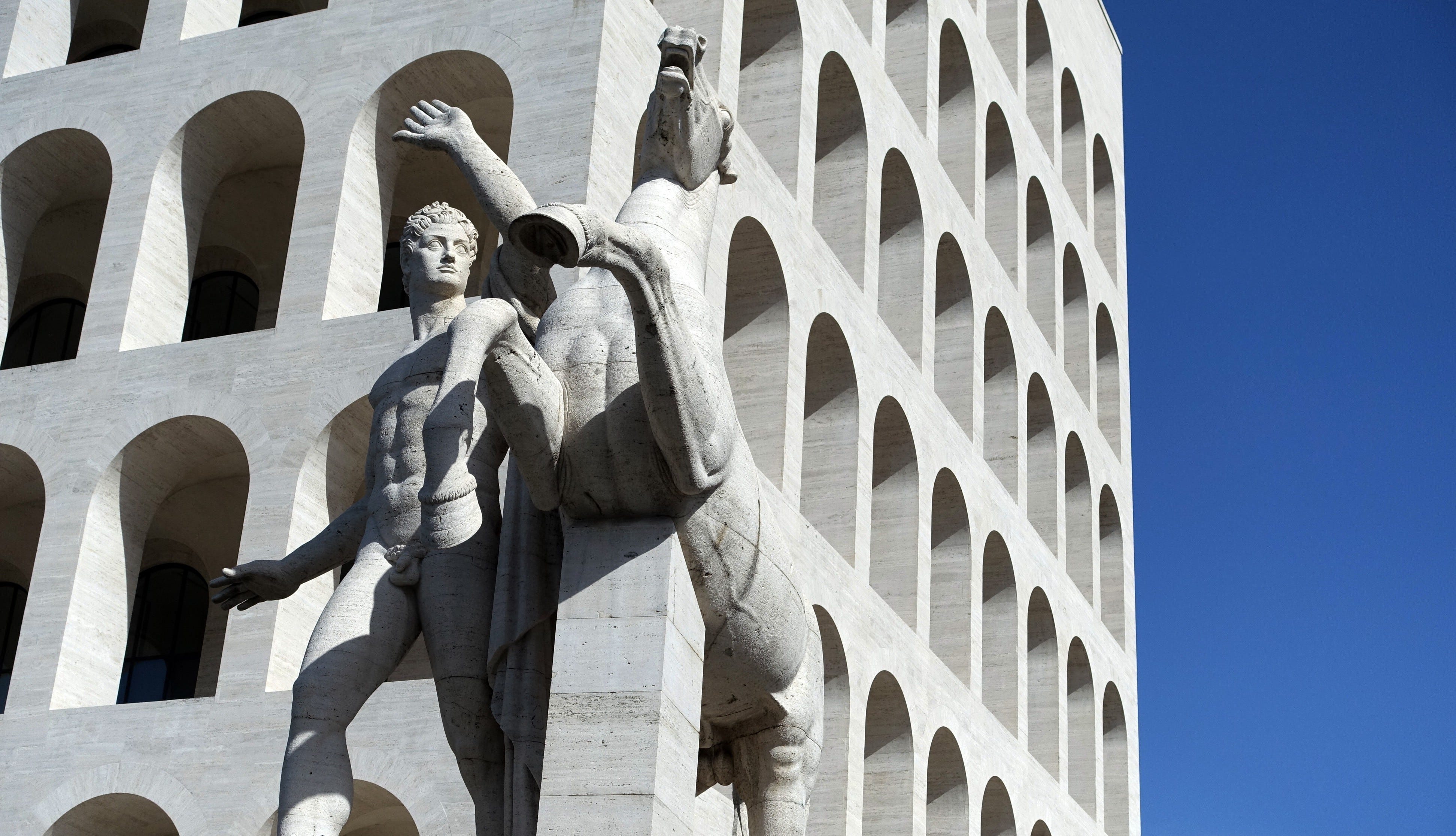
After the retreat proper was over, half of the attendees stayed on for five days of tourism. We saw all the highlights. From Ancient Rome, we saw the Colosseum, Forum, Palatine Hill, Pantheon, Ara Pacis, and the Mausoleum of Augustus, as well as Castel St. Angelo, the fortress built on the ruins of the Mausoleum of Hadrian. From Renaissance and Baroque Rome, we saw St. Peter’s Basilica, the Vatican Museums, the Capitoline Museum, the Galleria Borghese, and the Galleria Doria-Pamphili. From Mussolini’s Rome, we saw the striking buildings of the Piazza Augusto Imperatore, the Foro Italico, and the EUR district. A good time was had by all.
Vilfredo Pareto noticed a pattern in human affairs that he expressed with the 80/20 rule. About 20% of causes produce 80% of effects, for good or ill: 20% of people commit 80% of crime; 20% of people do 80% of good things as well. Smart people focus on the 20% of work that produces the 80% of rewards.
I have to remind myself of the 80/20 rule whenever I do CC Retreats: because they are so much fun, I feel like I am goofing off, but in truth such events are part of the 20% of efforts that produce 80% of the rewards, because nothing serious can happen until our movement comes offline into the real world and builds real human relationships and collaborations.
We had an excellent videographer present. We will share videos in the coming weeks.
I want to thank everyone who attended, the well-wishers who could not attend but sent donations in their place, Cyan and other members of the Counter-Currents team, Sébastian and his team at CasaPound, and all of writers, readers, and supporters who make Counter-Currents possible.
Source: https://counter-currents.com/2026/04/counter-currents-in-rome/
Excellent news.
I frequently visit Rome and would welcome a steer on retail outlets where I can sensibly spend my money - bookshops, cafes, restaurants, transport, tour guides, etc?